When investing in property with a low budget, where should you put your money to get the best compounding returns—a commercial property, a plot of land, or a flat? Let us find out.
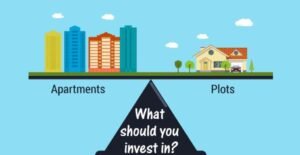
The First Option: Flats (Why I Reject It)
I completely rule out flats for investment. While a flat is undoubtedly great for living in and everyone should buy one for personal use, it is a poor choice for investment.
(a) The Debt Trap: The very day you buy a flat, you fall into debt because you take out a loan. You then pay for the flat step-by-step according to the builder’s payment plan, which loses you money in interest.
(b) Hidden Costs: You spend extra money on interiors, furniture, and monthly maintenance.
(c) Low Growth: Despite all these expenses, the price of a flat rarely goes up. In total, you face a loss—whether it is an interest loss, a time loss, or a financial loss.
Prices do not rise because today people are just running after show and decoration. Builders use great marketing to make a profit and sell the flat to you, and then they leave.
Let’s Look at an Example Flat Cost Rs 2 Crore The Resale Struggle: If you try to sell this flat in the next 5 years, you will have to put in your absolute best efforts just to get your ₹2 Crore back. This is because you already bought it at a very high price for that area.
Poor Rental Yield: If you rent it out, you only get around ₹20,000 to ₹30,000 a month. If the flat needs renovations or other repairs, you sink deeper into a loss while your EMI and maintenance charges keep running.Outdated Standards: In 20 years, when your EMI finally ends, people’s tastes and living standards will have completely changed.
Since the builder is no longer marketing that old building, its prices will not rise.Therefore, a flat is fine for living in, but not for investment or rental income. A Fixed Deposit (FD) is much better than a flat because it has no maintenance, no hassles, no fear of tenants leaving, and no worry about whether the property will sit vacant.